

Thanos Chatziioannou, a Researcher and Tutor (Lecturer) of Security Studies at Leiden University.
Since the Madrid bombings in 2004, Islamist extremism has been designated as one of the most critical threats to Europe’s security and social cohesion.[1] Despite extremist violence being a common historical occurrence in every religion[2], the fact that these acts have been committed in the name of Islam has exposed deep-rooted deficiencies in European societies.
Moreover, the ability ISIS demonstrated to recruit thousands of Muslims in Europe and Asia to fight in Syria and plan attacks in the West, challenged assumptions about Islamist extremism.[3] Due to the challenge it poses to the cultural identities of countries it manifests in, it has been the subject of a rigorous debate over the causes of its emergence. Utilizing historical and contemporary case studies, I will attempt to discern the influence of external threats on the emergence of Islamic extremism.
Lessons From History
The historical experience of Islamist extremist movements provides conflicting insights regarding the relationship between their emergence and the presence of external threats to Muslims. On the one hand, Islamist groups in former British colonies serve as evidence of extremism being derived from religious principles, with external stimuli influencing a predetermined situation.
While acknowledging that leaders of jihadist-type movements in the Arab world and India fed off their encounters with Western powers, it is evident that the importance of ingrained religious beliefs preceded anti-colonial sentiments.[4] More specifically, the threat that colonial powers posed to Muslims was interpreted through the Islamic scriptures as malaise to their societies. These Muslims blamed foreign domination for societal ills and, by expelling them, reverted into traditional mores.[5] In that sense, threats like colonial domination do not generate extremism but serve as an object for Islamist struggles to focus on.
Looking into struggles with Islamist presence, different conclusions can been drawn as well. African regions occupied by the West, like Senegambia, were largely ignorant of Islamic traditions but resorted to local Muslim leaders to rebel against foreign dominance.[6] During these wars, they were introduced to the concept of “jihad,” which retains a prestigious position in local cultures due to its association with anti-colonial revolutions and not Islam per se.[7]
Consecutively, Islamic elites realized that the call for violent struggle under religious guise was the most useful weapon against colonial powers, despite its inconsistency. Even when Muslims worldwide rejected the Arabs’ call to assist them against Israel through extremist acts in 1967, their defeat spurred the modern Islamic revival since it was attributed to the loss of religious roots prevalent in previous anti-colonial wars.[8]
Influential Islamist thinker Sayyid Qutb was instrumental in this endeavor. He wrote that an international conspiracy by the West threatened Islam and, therefore, Muslims must react by adopting it as an all-encompassing ideology from which they will draw legitimacy for their struggle against foreign elements.[9] The Arabs’ humiliation caused them to rally around the Crescent in an effort to gain a cultural shield against foreign invasion.
Aside from the colonial era, external threats also serve as a catalyst for the rise of Islamist extremism in contemporary times, due to the imposition of a grievance culture manifesting as a result of the demonization of Islam and invasions of Muslim nations by the West. This inequality of power drives Muslims to see themselves as besieged, and the honor of Islam threatened. Attacked from all sides, they resort to extremist violence as a what they view as legitimate tool to face a militarily superior enemy.[10]
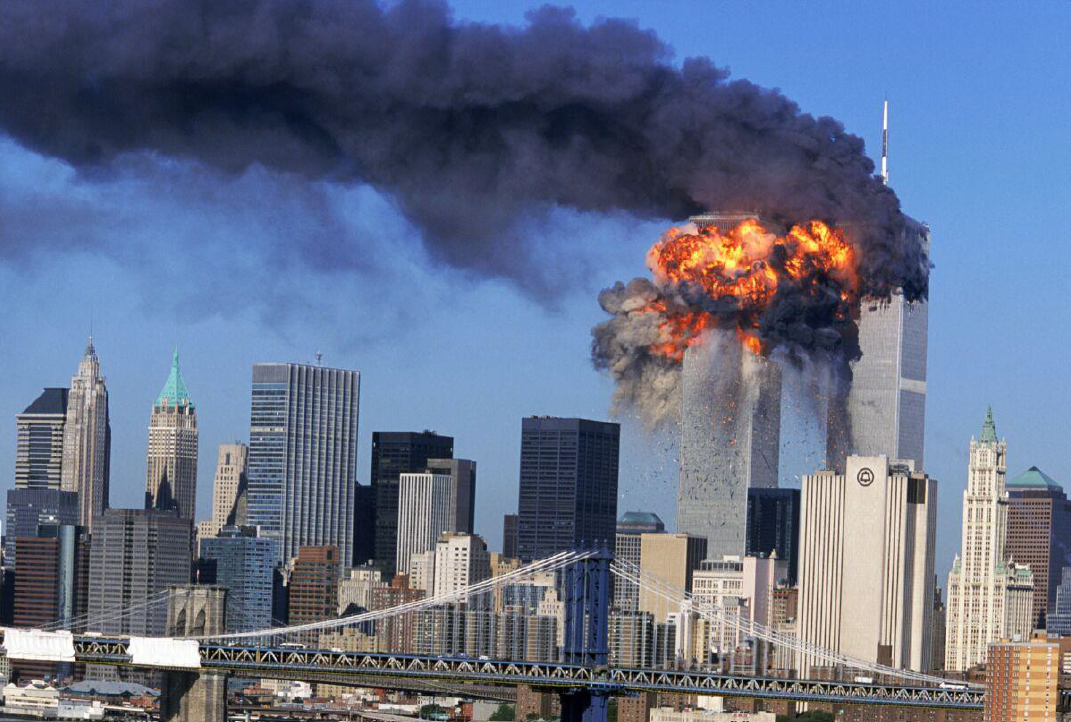
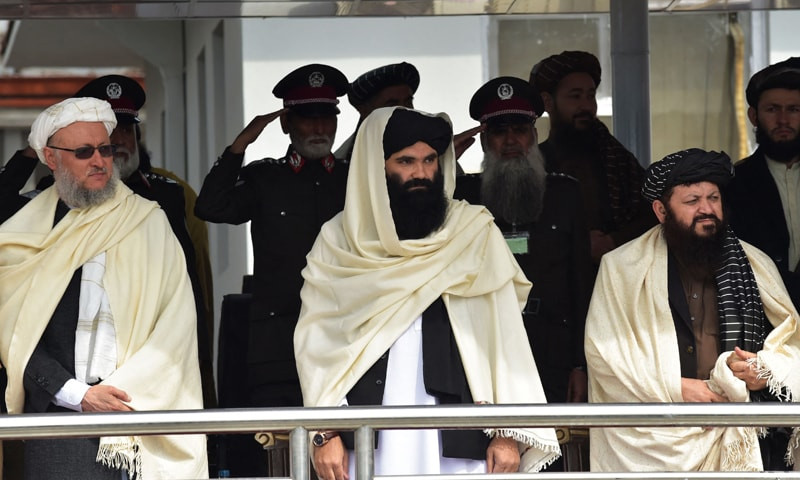
Even when violence didn’t manifest directly, this culture was exemplified by the landslide victories of previously marginal extremist Islamist parties in Afghani elections after anti-Muslim rhetoric spiked in the US due to 9/11. They subsequently allied themselves with the Taliban to expel the Western forces.
The contemporary African political landscape offers similar observations, with the Muslim reaction against the abuses of Kenya’s Christian government and the rise of the Islamic Party of Kenya being telling examples. Muslims in Kenya were willing to support the party of violent Islamist extremist, Sheikh Khalid Balala, only after Moi’s Christian government rejected their claims about anti-Muslim discrimination in Kenyan society.[11] The Christian majority came to be regarded as an external threat that alienated Muslims from the socioeconomic fabric of Kenya and they resorted to an extremist religious party as a reaction.
Finally, evidence of the recruiting methods Islamists use to attract foreign fighters to insurgencies in the Middle East affirm the essence of Islamist extremism as a reaction to external threats. From the Soviet invasion of Afghanistan to the Syrian civil war, Muslims are drawn to conflicts involving Islamist extremists, because they are framed as threats to a religious community they identify with — the Muslim ummah.[12] Insurgents emphasize victory for their side as necessary for the interest of the whole Muslim community, influencing potential recruits that identify more with the ummah than their respective national identities to join them to defend their lands and culture.[13]
The Nature of Islam
Islam has been the recipient of numerous accusations because of its perceived natural affinity for violent extremism. Orientalists have been at the forefront of propagating Islam’s violent proclivity, ranging from the need to wage war as an unavoidable cultural principle of every Muslim,[14] to the belief that martyrdom and jihad are inevitable parts of the Muslim experience.[15]
Meanwhile, the influential book Clash of Civilizations popularized these notions by arguing for Islam’s uncivilized nature and inferiority compared to the West due to its irrational predisposition towards extremist violence without provocation.[16]
More contemporary works have attributed the emergence of Islamist extremism to the Quran rather than any reaction to external threats. Indian research Amritha Venkatraman, wrote that Muslims exist in a permanent stage of cultural siege, due to the obligation prescribed by the Quran to defend the sharia, their religious code of conduct.[17] Since the sharia guides every aspect of life, its preservation will constantly be perceived as threatened by outside influences, thus rendering the search for genuine threats meaningless to credit for the rise of extremism.
Geopolitical conditions, like European colonization, are important milestones for Islamist extremism, but the temptation to resort to it lies in the discourse of the Islamic scriptures.[18] Likewise, the foundational texts of Islam have been the recipient of the same ire, with scholars dismissing the idea that extremist violence was inherent to them and cannot be disassociated from the Muslim experience regardless of external threats.[19]
On the other side of the debate, such notions have been rejected by scholars that attest to a resolute connection with external threats. Omar establishes that the extremist violence overtaking Muslim countries is the product of colonial legacies, and great power politics.[20] Islam is not violent by nature but fills in the gaps left by the immense vulnerability Muslims feel when faced with overwhelming threats.
The barbarity associated with US foreign policy in the Middle East and the double standards it applies toward Israel, threaten to diminish the Arabs’ position in the region and is regarded as a foreign occupation that will rip Muslims from their ancestral cultural space.[21] In this context, Islam serves the same function as nationalism in the West: to mobilize support for wars.
Similar ideas about the significance of external threats as triggers for Islamist backlash are present in Sayyid Qutb’s works, where he writes that Islam is an emancipatory movement and the only one capable of expelling colonialists.[22]
Furthermore, approaching Islamist groups like the Taliban from an existential viewpoint, researcher Scott Gibbs regards the moral rigidness of religious extremism as the only shield Muslims in the Middle East can use to protect themselves in an environment of permanent existential threats. Widespread destruction, cultural oppression by the West, and loss of identity cause them to believe that they lost control of their lives and that the absolutist interpretation of Islamic texts can serve as stable markers for their livelihood.[23]
Grievances
Moving on from Islam as a doctrine, the emergence of extremism has been associated with how Muslims interpret external threats due to their mental and social traits. Multiple researchers agree on the importance of socioeconomic inequality, religious discrimination, and alienation inflicting Muslims in Western societies for their receptiveness to radical propaganda that depicts Western presence in the Middle East as a threat to their religious identity.[24]
On his part, researcher Douglas Pratt builds upon this and writes that Islamophobic reactions evoke extremism in a circle of co-radicalization, which alienates Muslims from the mainstream fabric of their host societies.[25] This state of social anguish causes Muslims to identify with extremist groups that frame their activities as a defensive fight against a superior adversary that wants to deprive them of the same cultural amenities that they lack in the West.
Furthermore, Islam does not solely correspond to an influential religion but also to a post-globalization subnational identity that immigrants in the West cling to retain a sense of ontological security. More specifically, the reasons brought up by most European foreign fighters for joining Daesh in Syria concern the loss of their life embeddedness more than the war itself.[26] The urge to reestablish existential certainty led these Muslims to radical religious milieus that presented Islamist extremism as the solution to their search. As a result, lack of existential meaning ended up legitimizing their acts in Syria instead of explicit anti-West sentiments. In this sense, external threats do not exist in a vacuum but are shaped by the radical mind.[27]
Staying on foreign fighters, insights concerning the push and pull factors of European Muslims traveling to Syria to fight for ISIS resonate with findings about loss of existential certainty, but also attest to the importance of the threats themselves for their decisions. Researchers Marjie Meines, Merel Molenkamp, Omar Ramadan and Magnus Ranstorp have concluded that individual motivation for joining Daesh is centered around uncertainty about identity and belonging, with the defense of Muslims under siege providing a narrative of suffering they mobilize around.[28] For them, the threat Muslims face is their starting point to seek a higher calling, status, and wealth, but their defense is not the primary motivating factor.
Conclusion
Studies on Islamist extremism and case studies themselves illuminate a complex relationship between its emergence and the presence of external threats to Muslims. Despite the abundance of literature, our understanding of this relationship is still rife with gaps, especially regarding why someone exposed to the same stimuli and carrying the same attitudes does not become an extremist.
For example, a study on Dutch foreign fighters uncovered perceived injustices against Muslims conducted by Syrian President Bashar al-Assad’s regime to be among their primary motivations for joining ISIS. However, comparatively scarce insights were provided concerning why some stayed in their host country and refrained from extremist acts despite continuing to identify with the struggle.[29]
Aside from individual motivations, research on the affinity of Islam for violence per se cannot yield any definitive results, due to being plagued by orientalist prejudices and self-affirming conclusions. The history of relevant movements is conflicting on the degree to which extremism is triggered by overwhelming threats to Muslims like Western domination or if they serve as targets on which inherent properties of Islam can be unleashed.
In that regard, Orientalist scholars have shifted focus to a supposed violent predisposition that leads Muslims to extremism regardless of external factors — views that multiple works have refuted by showcasing the colonial legacies underpinning extremist violence in Muslim nations.
Furthermore, field studies about personal motivations of Islamist extremists reveal that external threats contribute to the emergence of extremism mainly when personal experiences of discrimination and existential uncertainty influence the individual itself.
European Eye on Radicalization aims to publish a diversity of perspectives and as such does not endorse the opinions expressed by contributors. The views expressed in this article represent the author alone.
__________________________________
References
[1] Niblett, R. (2006). Islamic Extremism in Europe. Center for Strategic and International Studies. https://www.csis.org/analysis/islamic-extremism-europe-0
[2] Stern, J. (2003). Terror in the name of God: Why religious militants kill. New York, NY: HarperCollins Publishers Inc.
[3] Lindekilde, L., Bertelsen, P., & Stohl, M. (2016). Who Goes, Why, and With What Effects: The Problem of Foreign Fighters from Europe. Small Wars &Amp; Insurgencies, 27(5), 858–877.
[4] Bar, S. (2008). The Religious Sources of Islamic Terrorism. The Theory and Practice of Islamic Terrorism, 11–20.
[5] Ibid
[6] Mohammed, K. (2018). Islam and Violence (Elements in Religion and Violence). Cambridge University Press.
[7] Ibid
[8] Zimmerman, C.J. (2004) Sayyd Qutb’s Influence on the 11 September Attacks, Terrorism and Political Violence, 16:2, 222-252.
[9] Ibid
[10] Ibid
[11] Oded, A. (1996). Islamic Extremism in Kenya: the Rise and Fall of Sheikh Khalid Balala. Journal of Religion in Africa, 26(4), 406–415.
[12] Malet, D. (2010). Why Foreign Fighters?: Historical Perspectives and Solutions. Orbis, 54(1), 97–114.
[13] Ibid
[14] Tyan, E. (1960). Djihād. Encyclopedia of Islam. Second edition.
[15] Harris, S. (2004). The End of Faith. New York, NY: W.W. Norton and Co.
[16] Huntington, S. P. (2002). The Clash of Civilizations and the Remaking of World Order. Simon & Schuster.
[17] Venkatraman, A. (2007) Religious Basis for Islamic Terrorism: The Quran and Its Interpretations, Studies in Conflict & Terrorism, 30:3, 229-248.
[18] Ibid
[19] Cook, M. (2014). Ancient Religions, Modern Politics: The Islamic Case in Comparative Perspective. Princeton: Princeton University Press.
[20] Omar, M. (2016). Islam Is a Religion of Peace. Foreign Policy. https://foreignpolicy.com/2015/11/09/islam-is-a-religion-of-peace-manal-omardebate- islamic-state
[21] Ibid
[22] Abu-Rabi, M. I. (1996). Intellectual Origins of Islamic Resurgence in the Modern Arab World. NY: State University of New York Press.
[23] Gibbs, S. (2005). Islam and Islamic Extremism: An Existential Analysis. Journal of Humanistic Psychology, 45(2), 156–203.
[24] Cronin, A. K. (2003). Behind the Curve: Globalization and International Terrorism. International Security, 27(3), 30–58. Mohiuddin, A. (2019) Islamophobia and the Discursive Reconstitution of Religious Imagination in Europe, Journal of Muslim Minority Affairs, 39:2, 135-156.
[25] Pratt, D. (2015) Islamophobia as Reactive Co-Radicalization, Islam and Christian–Muslim Relations, 26:2, 205-218.
[26] Ibid
[27] Ibid
[28] Meines, M., Molenkamp, M., Ramadan, O., & Ranstorp, A. M. (2017). RAN Manual: Responses to Returnees: Foreign Terrorist Fighters and their Families. Radicalisation Awareness Network (RAN) Centre of Excellence.
[29] Bakker, E., & Grol, P. (2015). Motives and Considerations of Potential Foreign Fighters from the Netherlands. Terrorism and Counter-Terrorism Studies